
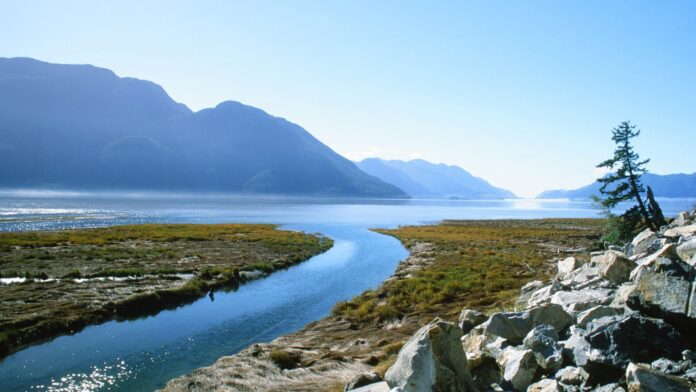

British Columbia has given the green light to a floating liquified natural gas (LNG) export facility on B.C.’s northern coast.
The province said on Monday the Ksi Lisims LNG facility on the northern tip of Pearse Island had received its environmental assessment certificate. The key regulatory milestone is required to proceed with construction, which could begin as early as this year.
Ksi Lisims – pronounced “s’lisims” – is being advanced through a partnership of the Nisga’a Nation, Rockies LNG and Texas-based Western LNG. The partners have not yet made a final investment decision for the project. The export terminal is slated to be built in South Korea by Samsung Heavy Industries.
Once operational, the facility would be able to export about 12 million tonnes of LNG every year to overseas markets in Asia. That would make it the second largest LNG export facility in B.C., after the LNG Canada project in Kitimat.
The province said Ksi Lisims LNG would be connected to B.C.’s electricity grid and is required to be net-zero ready by 2030.
The project is reliant on construction of the 900-kilometre Prince Rupert Gas Transmission pipeline, which was granted a substantial start by the B.C. government in June.
The province said Ksi Lisims LNG is expected to contribute up to $16.8 billion in GDP to the Canadian economy over 30 years.
The site is expected to employ up to 800 workers during peak construction, with a permanent workforce of 150 to 250 people.
“This milestone reflects the strength of Indigenous leadership and our commitment to sustainable economic self-determination,” said Eva Clayton, president of Nisg̱a’a Lisims Government, in a statement.
“Ksi Lisims LNG represents a transformational opportunity for all participating B.C. Nations, and it will be developed in line with our Nation’s high environmental standards,” she said.
In a document outlining the reasons for the decision, B.C.’s Environment Minister Tamara Davidson and Energy Minister Adrian Dix acknowledged the approval was made without the consent of several First Nations, including the Haida Nation, the Kitsumkalum First Nation, Lax Kw’alaams Band and Metlakatla First Nation.
They noted concerns were raised during consultations about the project’s sustainability, particularly around the use of natural gas-fired power barges used to electrify the project prior to connection to the BC Hydro electrical grid.
The ministers also dismissed concerns about rising capital costs and a potential oversupply in the global LNG market, noting the proponents ultimately bear the financial risk of the project.
They acknowledged Ksi Lisims would have potential negative effects on the region’s infrastructure, including the already strained medical infrastructure, but said those concerns are outweighed by the expected socio-economic benefits to British Columbians.
Premier David Eby said Tuesday “there’s still work to do” for the Nisga’a Nation and its partners to engage with other First Nations. “At the same time, we want to make sure we’re moving forward with projects,” he said.
Ksi Lisims has also seen criticism from environmental advocates for proponent Western LNG’s ties to U.S. private equity firms and the Trump administration.
Eby said he welcomes global investors to British Columbia. “Those investors, regardless of their political affiliation, could invest anywhere… They’ve decided to bring it here to British Columbia to create jobs and opportunity for the Nisga’a people, for British Columbians and for Canadians,” he told reporters in Vancouver.
The B.C. Greens interim leader c said the party opposes the project, citing climate impacts, risks to salmon and human health, and its economic uncertainty.
“The NDP has approved a foreign-owned, foreign-built fossil fuel project that will enrich US billionaires while leaving British Columbians to bear the costs,” said Valeriote. “This desperate search for short-term revenue is the result of years failing to invest in the clean economy of the future.”
The federal government has also shown interest in advancing LNG projects in B.C.
Prime Minister Mark Carney’s initial list of five projects for proposed fast-tracking under Bill C-5 includes the second phase of construction on LNG Canada’s Kitimat facility.
Similar legislation passed in B.C. earlier this year provides the provincial government with powers to fast track a wide array of projects, including LNG.